

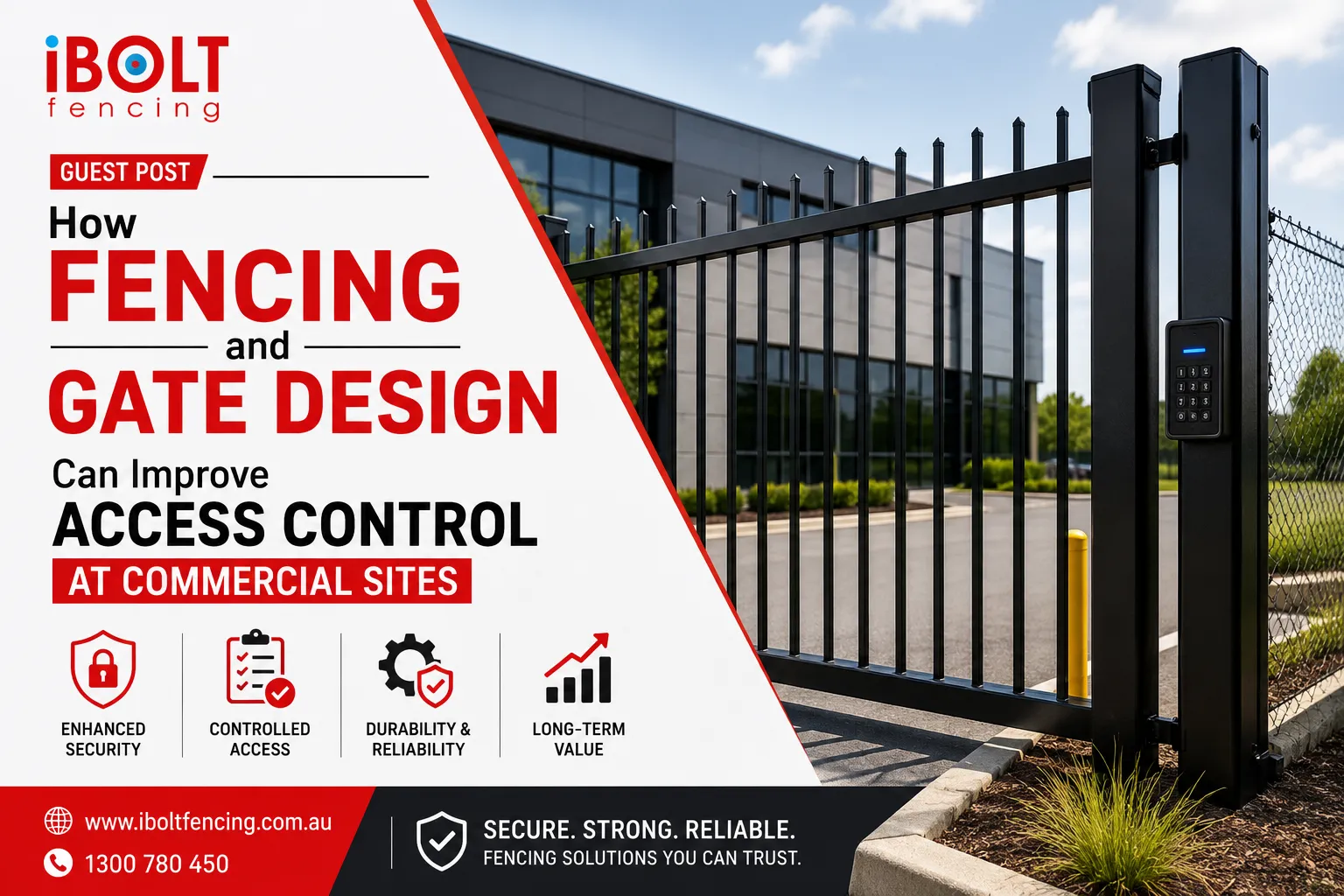
Access control begins before a person reaches a building door. At warehouses, factories, service yards and larger business premises, the way a perimeter guides vehicles and pedestrians can determine how easily movement is managed across the entire site.
Well-planned industrial fencing can establish where people should enter, which areas are restricted and how vehicles move between public and operational zones. Gates then turn that boundary into a controlled system rather than a simple physical enclosure.
A Fence Can Shape Movement Around a Property
Fencing is often discussed mainly in terms of security, but its layout also influences behaviour.
A defined boundary can direct visitors towards reception, stop pedestrians wandering into loading areas and separate public parking from operational sections.
Commercial sites may use fencing to distinguish:
-
Main entrances
-
Staff parking
-
Delivery zones
-
Storage compounds
-
Machinery areas
-
Service yards
-
Pedestrian routes
-
Restricted sections
This makes fencing part of site organisation as well as perimeter protection.
Separate Vehicle and Pedestrian Access
Combining every type of traffic at one entrance can create unnecessary congestion, particularly during shift changes or delivery periods.
Where space allows, separate pedestrian and vehicle access can make movement clearer. Employees walking into the property do not necessarily need to pass through the same opening used by trucks.
Businesses using commercial fencing can incorporate pedestrian gates and vehicle entrances into the initial design so the perimeter supports ordinary routines from the first day.
Look at Peak Traffic, Not Quiet Periods
An entrance may appear adequate when only one vehicle is present.
Plan around the busiest part of the day
Consider how the driveway functions when staff arrive, suppliers deliver materials and contractors are entering simultaneously. Designing around peak activity gives a more realistic picture of the gate width, number of access points and internal queuing space required.
Gate Location Can Affect the Whole Site
A gate positioned too close to an internal junction, loading bay or busy road can create operational problems even if the gate itself works perfectly.
Before confirming its location, examine:
-
Turning requirements for large vehicles
-
Visibility when entering or leaving
-
Distance from public roads
-
Space for vehicles waiting for access
-
Nearby pedestrian paths
-
Internal traffic circulation
-
Existing buildings and structures
Gate design should be treated as part of the wider property layout.
Choosing an Appropriate Gate Arrangement
Different sites may use sliding, swinging or other gate configurations depending on available space and access requirements.
Businesses investigating commercial gates perth should start with physical constraints. A gate that requires a large swing area may not suit an entrance where vehicles regularly stop close to the boundary, while other configurations have their own installation and clearance considerations.
Commercial gates Perth projects should therefore consider usability before focusing on appearance.
Use Internal Fencing to Create Controlled Zones
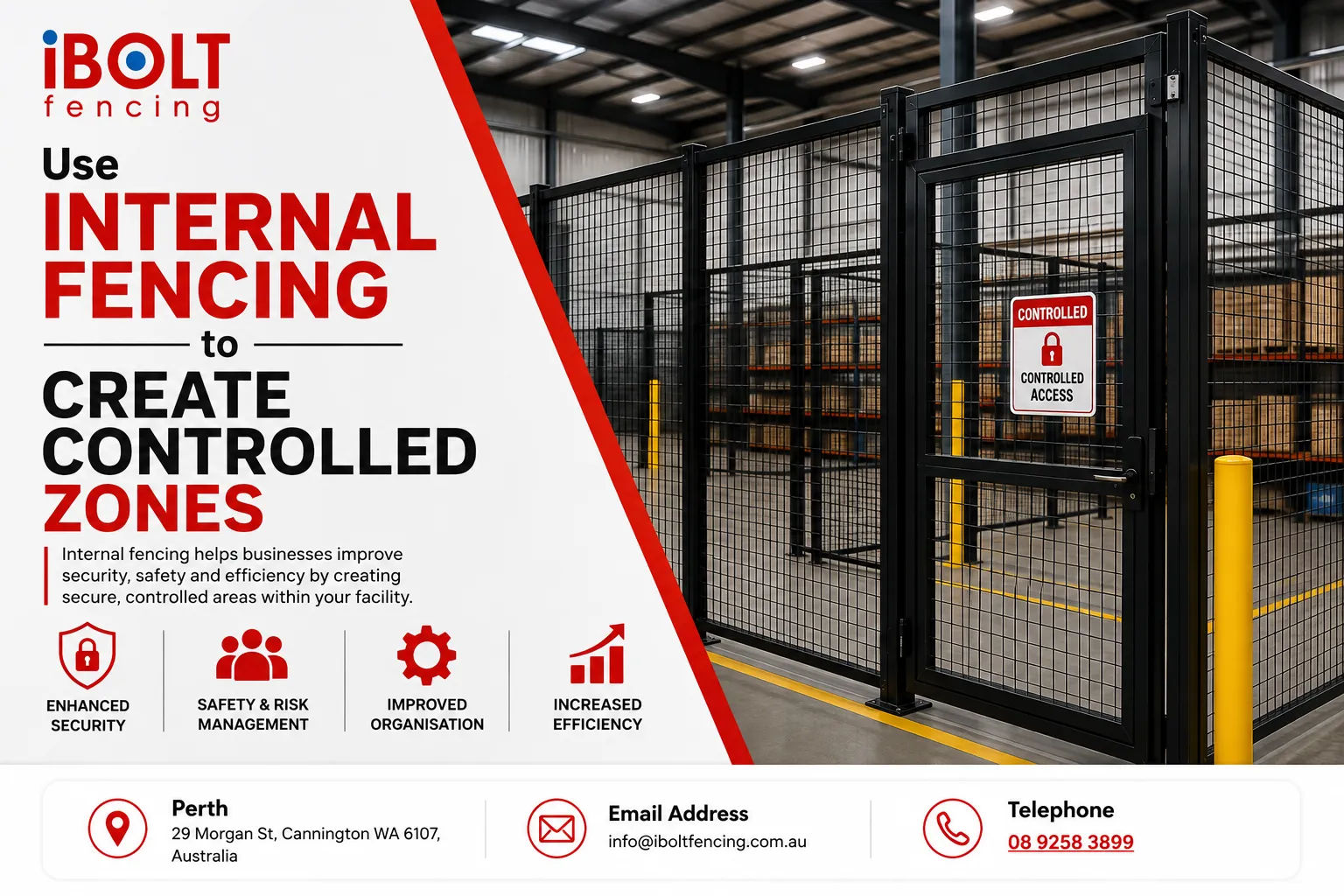
Access control does not have to stop at the external perimeter.
Industrial properties may contain areas that are suitable for general staff access alongside sections containing equipment, utilities or materials that require greater restriction.
Industrial fencing can be used internally to form designated compounds or separate vehicle and pedestrian areas.
Keep Operational Boundaries Clear
Clearly visible boundaries can reduce uncertainty about where people are permitted to go.
Support site procedures with physical layout
Signs and staff instructions are useful, but fencing can reinforce those rules by directing movement physically. This is particularly helpful on sites regularly visited by drivers, contractors or temporary personnel who may not know the property layout.
Think About Future Changes
Commercial properties evolve. A business may expand its warehouse, introduce larger delivery vehicles or change how staff parking is organised.
A fencing plan should consider foreseeable changes where possible. Leaving suitable space around strategic access points may make future modifications less disruptive.
Commercial fencing that accommodates reasonable operational growth can be more useful than a layout designed only around current conditions.
Combine Perimeter Planning With Other Security Measures
Fences and gates work best as part of a broader site-management strategy. Lighting, surveillance cameras, intercoms and workplace procedures may all contribute to access control.
For example, keeping clear sightlines around gates may help staff see arriving vehicles. Similarly, locating surveillance equipment with gate movement in mind can improve monitoring of entry and exit areas.
The physical perimeter creates the framework within which these other measures operate.
Why Choose Us
iBOLT Fencing can help businesses consider fencing and gates as one connected part of the site’s access layout. This is particularly valuable for properties with frequent deliveries, separate operational areas or multiple types of daily traffic.
A practical discussion of entrances, vehicle size, pedestrian movement and restricted areas can help shape a system that supports the way the business actually functions.
About Us
iBOLT Fencing provides fencing and gate solutions for commercial and industrial properties in Perth. Projects can be approached with attention to perimeter requirements, access points and the practical needs of the site.
For organisations evaluating commercial gates Perth, considering the gate alongside surrounding fencing and traffic patterns can help produce a more coherent access arrangement.
Closing Perspective
A commercial perimeter is most effective when it controls movement without making normal operations unnecessarily difficult. Fence lines define the space, while appropriately planned gates determine how that space is accessed.
By considering vehicle circulation, pedestrian movement, restricted areas and future site needs together, businesses can turn fencing into a useful part of everyday access management.